For teachers and homeschoolers
Directed drawing
Directed (guided) drawing is when the class draws the same picture together, one step at a time. Here is how to run it, and free lessons to run it with.
In a directed drawing lesson the teacher draws one step on the board or screen, the children copy it, and you move on together. It works because every child ends with a recognisable picture, the steps are small enough that nobody gets lost, and the talk is all about shapes and position, which is the drawing vocabulary you want them to have anyway. It also fits a twenty-minute slot.
Every lesson on the site is built for this: numbered steps, the new lines in red, a replay animation for the board, and a one-page printable worksheet plus a trace sheet for early finishers or for sending home.
How to run a directed drawing lesson
Put a lesson on the board
Open the lesson on the projector. Tap the picture at the top to replay the whole drawing once so children see where they are going.
One step at a time
Scroll to step one, read the instruction, and draw it yourself on the board or a sheet under a camera. Wait until most pencils stop before the next step.
Talk in shapes and positions
“A big egg in the middle of the page.” “Two triangles touching the top.” Avoid “like this”, the words are the lesson.
Outline, erase, colour
At the end everyone goes over the real lines with marker, rubs out the guide lines and colours. The printable worksheet works as a take-home or an early-finisher sheet.
Kindergarten and 1st grade
KindergartenFaces and ten-step drawings; one big shape and a few lines. Twenty minutes including colouring.

How to Draw a Cat Face
10 steps

How to Draw a Dog Face
9 steps

How to Draw a Panda Face
7 steps

How to Draw a Frog Face
7 steps
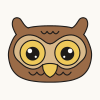
How to Draw an Owl Face
9 steps

How to Draw the Sun
10 steps

How to Draw an Apple
10 steps
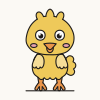
How to Draw a Chick
11 steps

How to Draw a Snail
10 steps

How to Draw a Snowman Face
10 steps
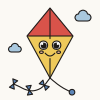
How to Draw a Kite
10 steps
2nd and 3rd grade
Whole animals, vehicles and simple buildings, eleven to thirteen steps.

How to Draw a Cat
12 steps

How to Draw a Fox
12 steps

How to Draw a Penguin
12 steps
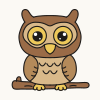
How to Draw an Owl
12 steps
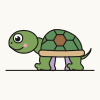
How to Draw a Turtle
13 steps
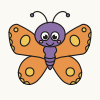
How to Draw a Butterfly
12 steps

How to Draw a School Bus
14 steps

How to Draw a Fire Truck
13 steps

How to Draw a House
13 steps

How to Draw a Pumpkin
10 steps

How to Draw a Turkey
12 steps

How to Draw a Snowman
13 steps
4th and 5th grade
More detail and more steps; good for an art period rather than a short slot.

How to Draw an Eagle
12 steps

How to Draw a Shark
12 steps

How to Draw a Horse
12 steps

How to Draw a Dragon
15 steps

How to Draw an Astronaut
13 steps

How to Draw a Castle
13 steps

How to Draw the Eiffel Tower
11 steps

How to Draw a Lighthouse
13 steps

How to Draw a Hot Air Balloon
12 steps

How to Draw a Pirate Ship
13 steps

How to Draw a Tiger
15 steps
Seasonal and holiday directed drawings
How to Draw a Pumpkin
10 steps

How to Draw a Jack-o’-Lantern
12 steps

How to Draw a Bat
11 steps
How to Draw a Turkey
12 steps
How to Draw a Snowman
13 steps

How to Draw a Christmas Tree
12 steps

How to Draw a Gingerbread Man
12 steps

How to Draw a Valentine Heart
10 steps

How to Draw a Shamrock
12 steps

How to Draw Earth
10 steps

How to Draw a Sunflower
11 steps
Classroom tips
- Plain copier paper and a pencil are enough. Save markers for the last step so early mistakes are cheap.
- Say “draw it big, the head should be the size of your fist” before the first step. Small first shapes are the main cause of crowded drawings.
- Let children tick steps on their own device if they have one; the steps tick as they scroll and the page remembers where they are.
- Print the worksheet for absent children and early finishers; the second page is a large outline to trace.
- Put the finished drawings up with the lesson name. Ask children to tell you which step was hardest, it is a good quick assessment of shape vocabulary.
Questions parents and teachers ask
What is directed drawing?
A whole-class drawing activity where the teacher demonstrates one step at a time and the children follow along, so every child finishes a recognisable drawing. It is also called guided drawing.
Is directed drawing good for kindergarten?
Yes, with short lessons: faces and ten-step drawings, lots of shape words, and big paper. The kindergarten page lists suitable lessons.
Are the lessons and printables free for classroom use?
Yes, free to project, print and send home. No account or login.